
Physical AI & robotics
Data that teaches robots what they are doing, and why.
Action descriptions, grasp points and multi camera video annotation for robot foundation models and manipulation.
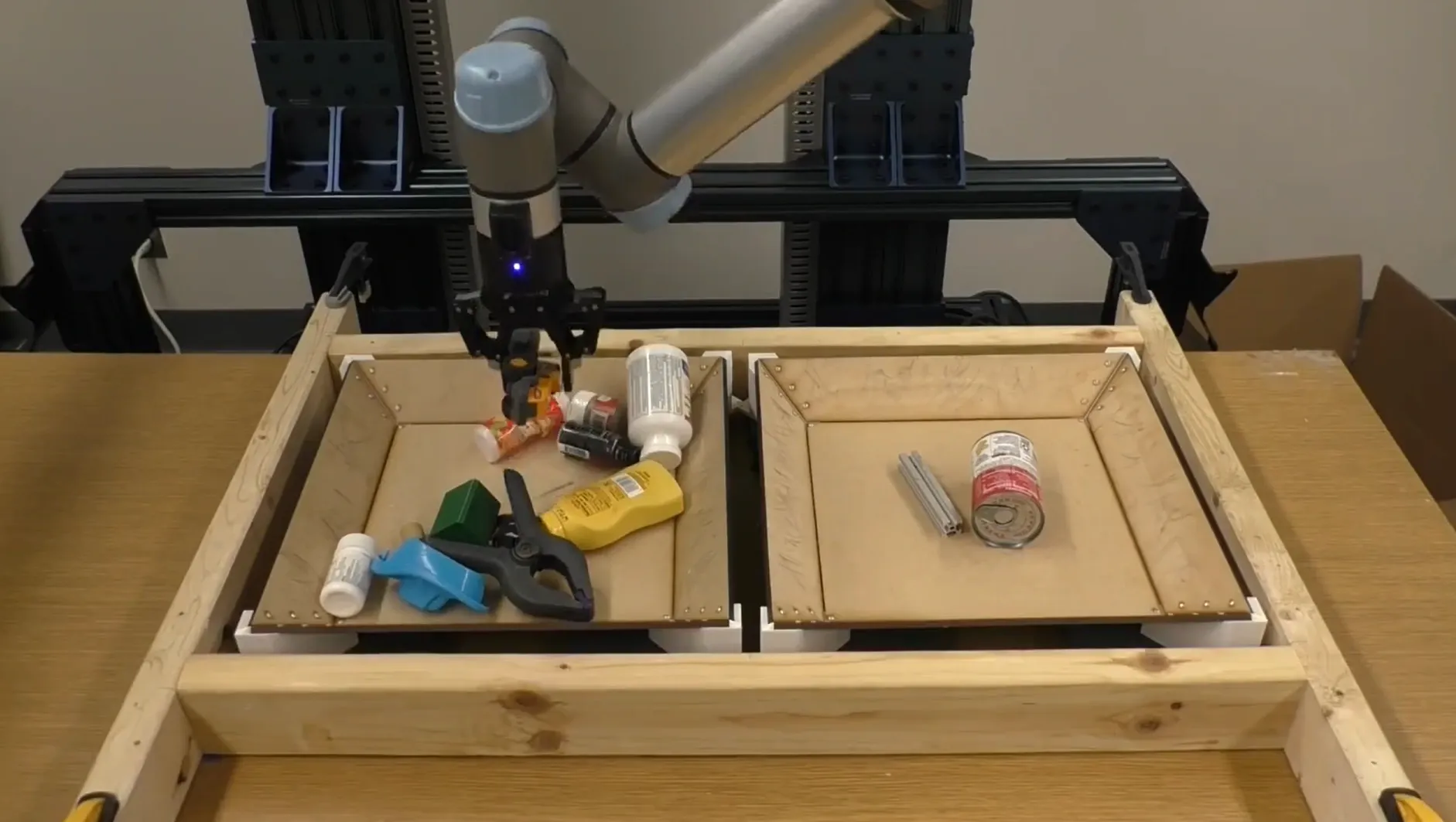
From demonstration video to a robot that knows what it is doing
Every part of the workflow where we can take work off your team.
Collection
Understanding
Manipulation
Evaluation
We work with multi camera video, images and point cloud.
What we label
Every class is written into a guide with your team before the first batch. Files come back as COCO JSON, YOLO, Pascal VOC, CSV, JSONL or your own schema.
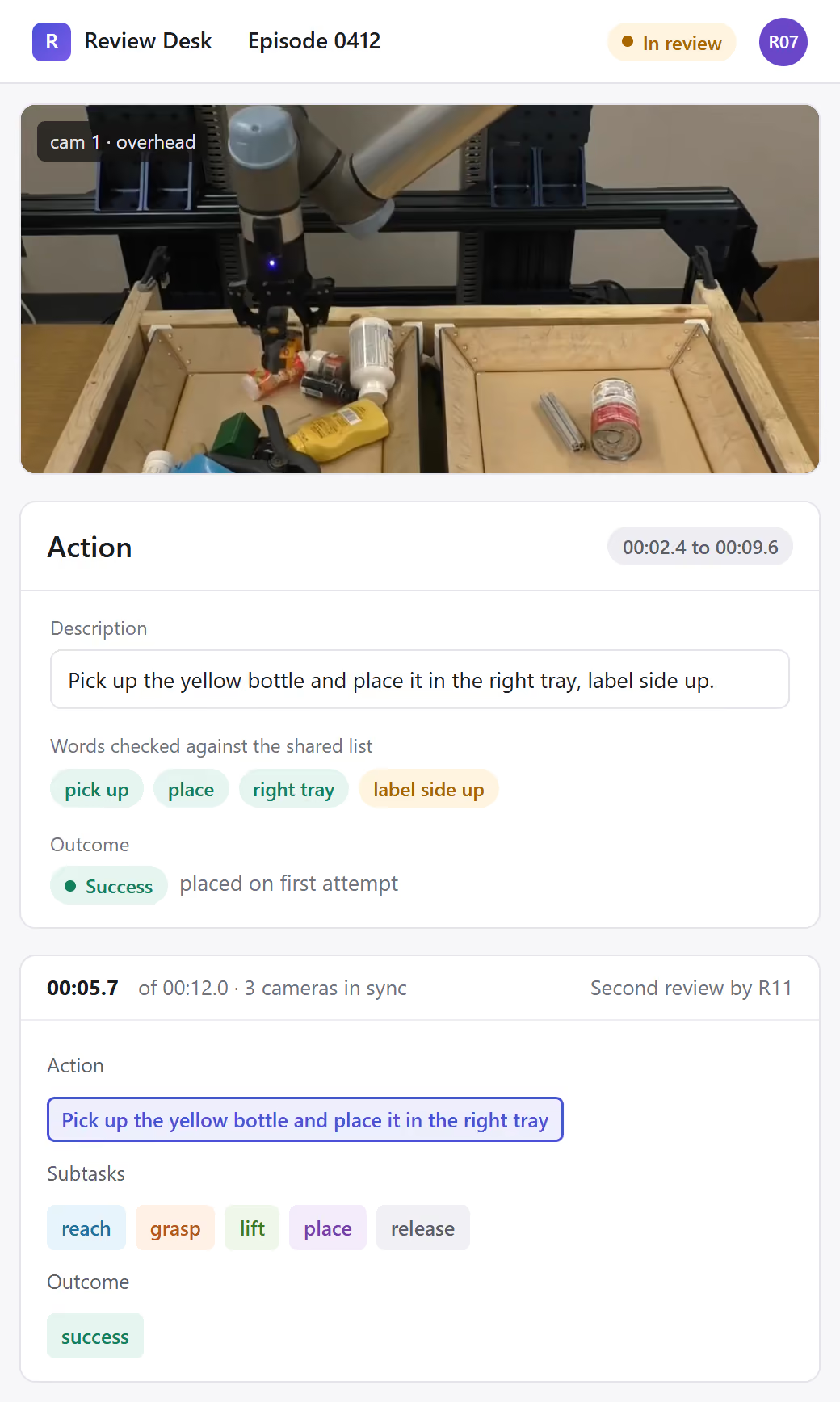
Actions
Description and time span
Pick up the cup, wipe the table, fold the shirt
Subtasks
Time span
Reach, grasp, lift, place, release
Outcome
Class and reason
Success, partial, failure
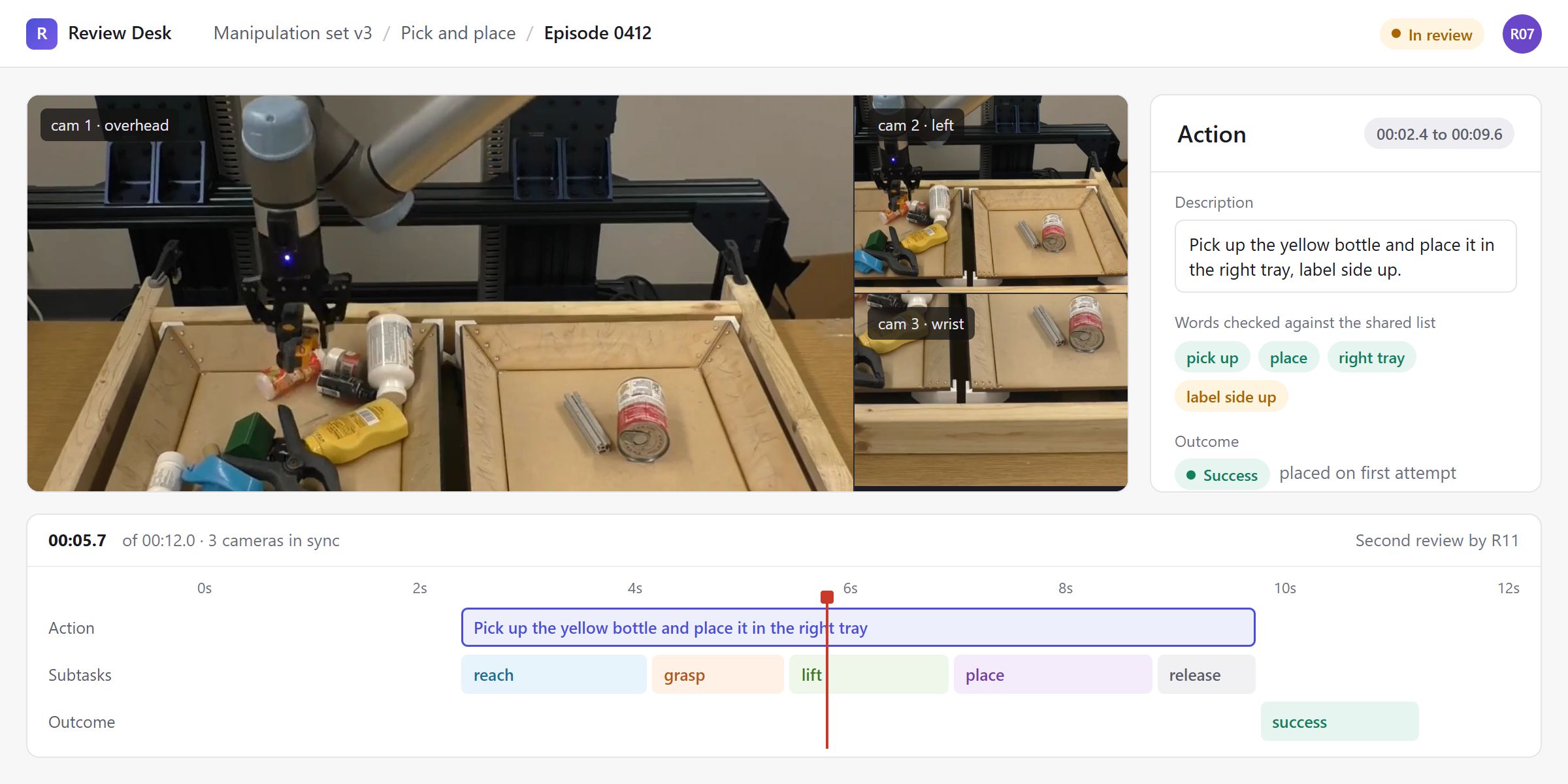
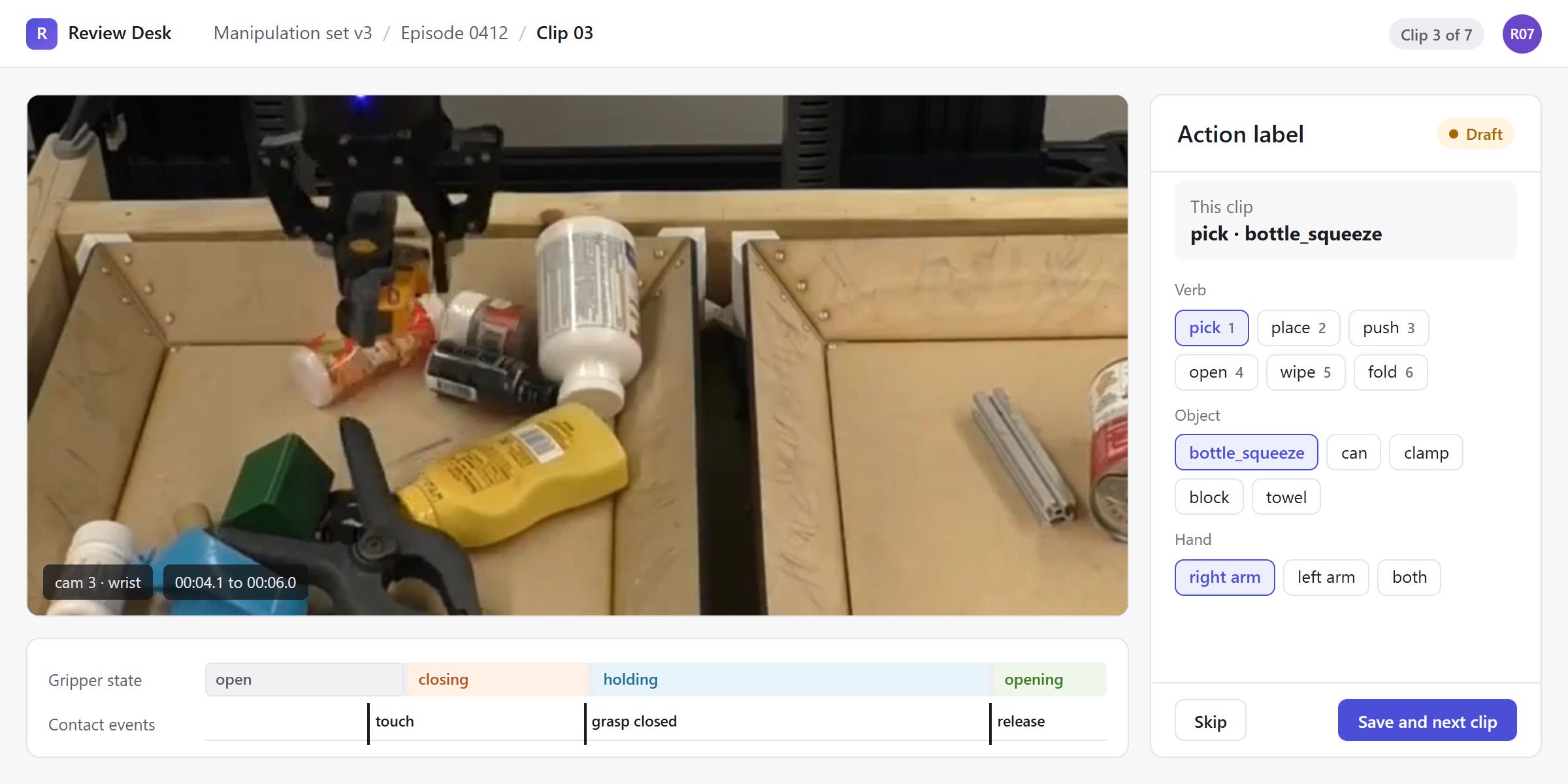
Verb and object
Class
Pick bottle, open drawer, wipe table
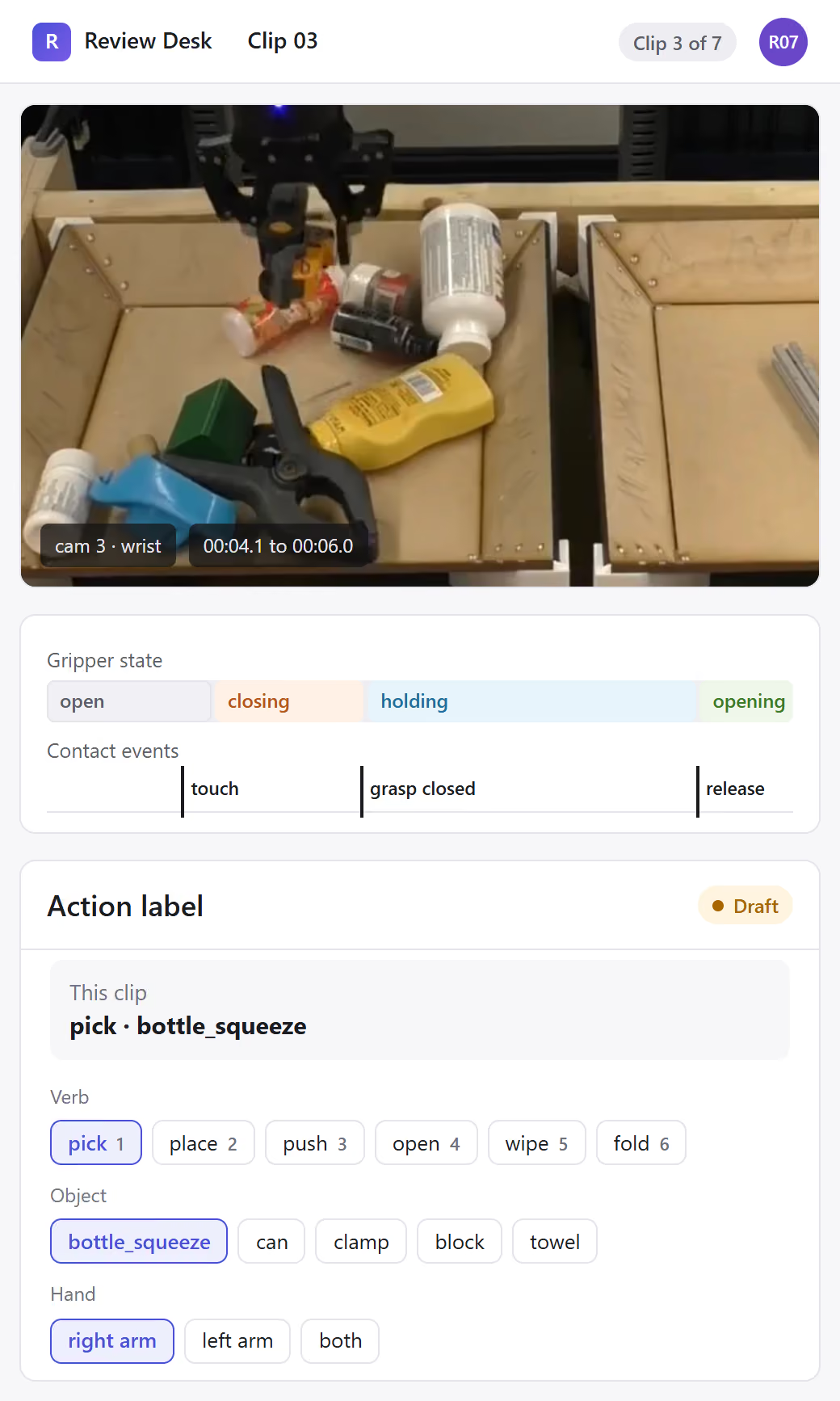
Contact events
Time point
Touch, grasp closed, release
Gripper state
Class and time span
Open, closing, holding, opening
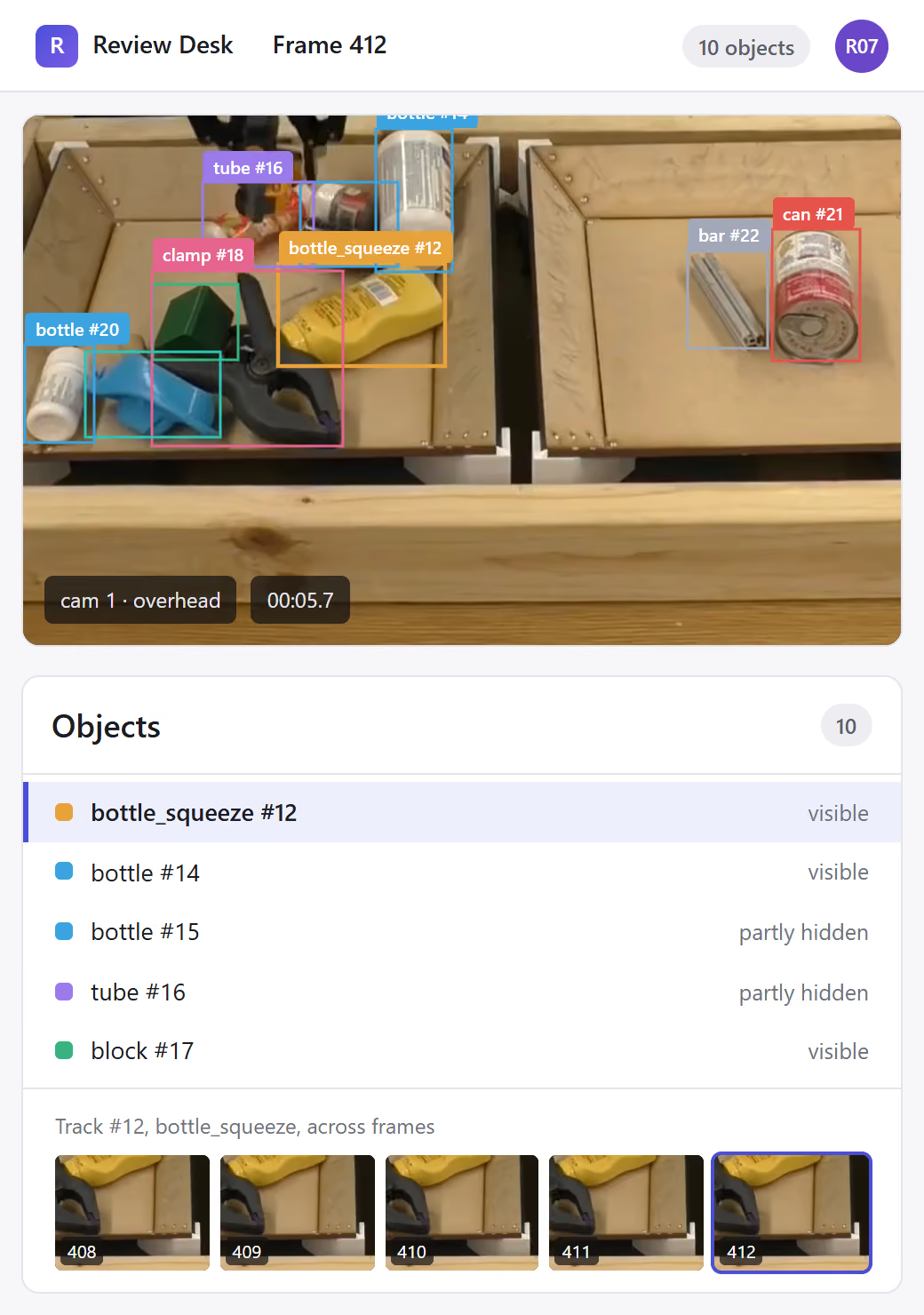
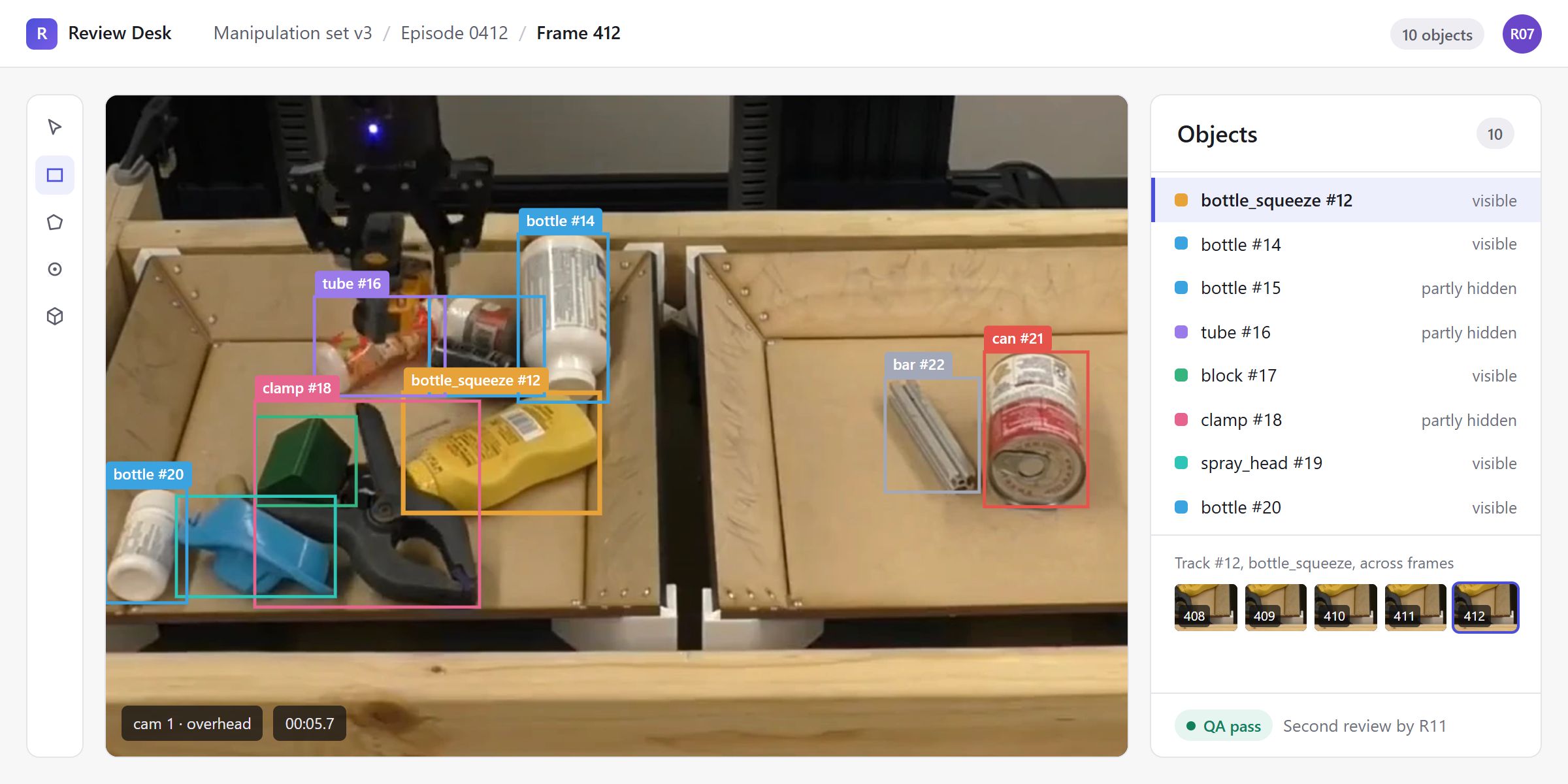
Objects
Bounding box
Bottle, can, clamp, cup, block
Tracking
Box and track ID
The same object across frames and cameras
Occlusion
Attribute
Visible, partly hidden, hidden
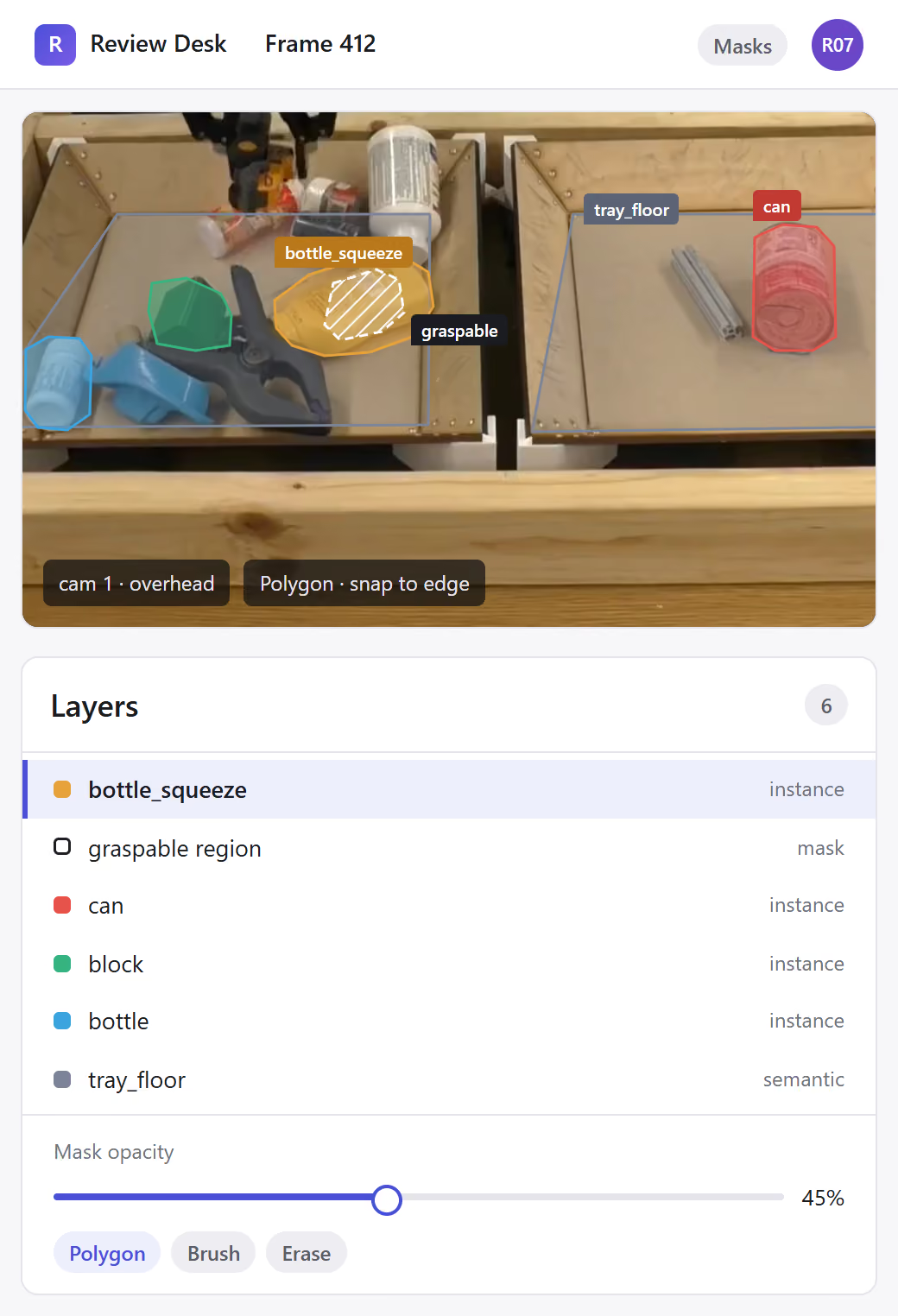
Objects and parts
Instance mask
Bottle body, cap, can, clamp
Surfaces
Semantic mask
Table, tray floor, tray wall
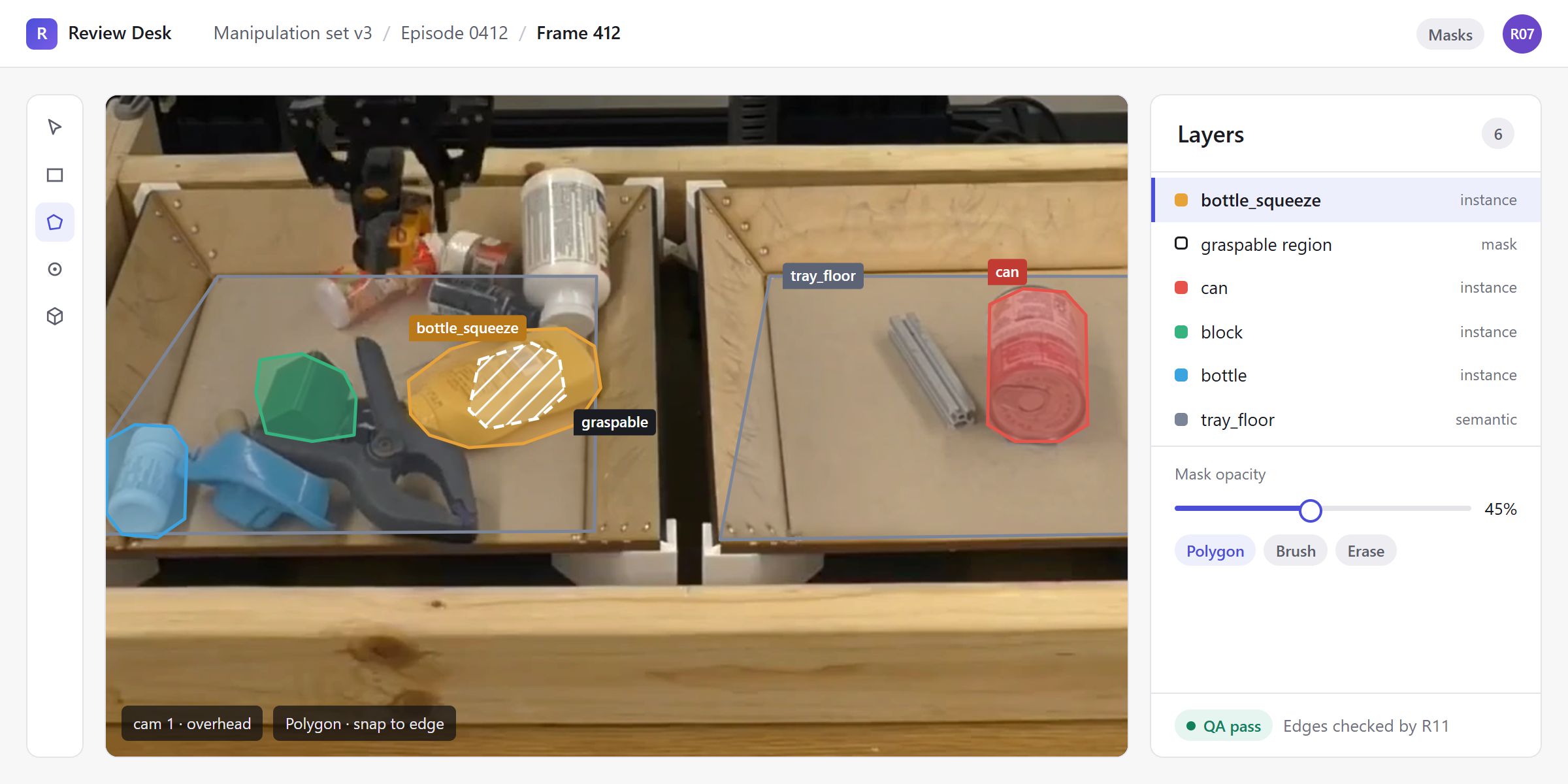
Graspable regions
Mask
Where a two finger gripper can hold the object
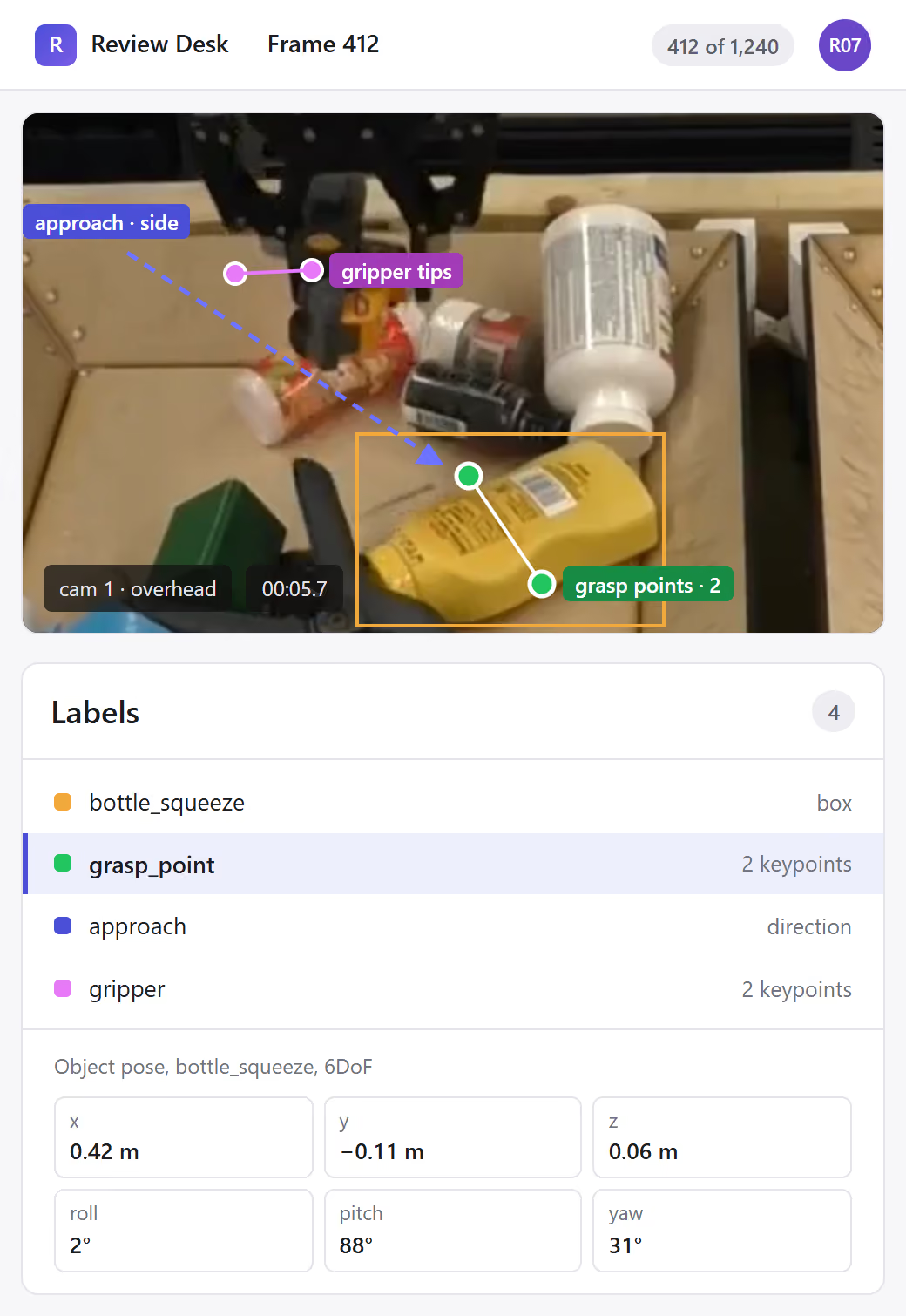
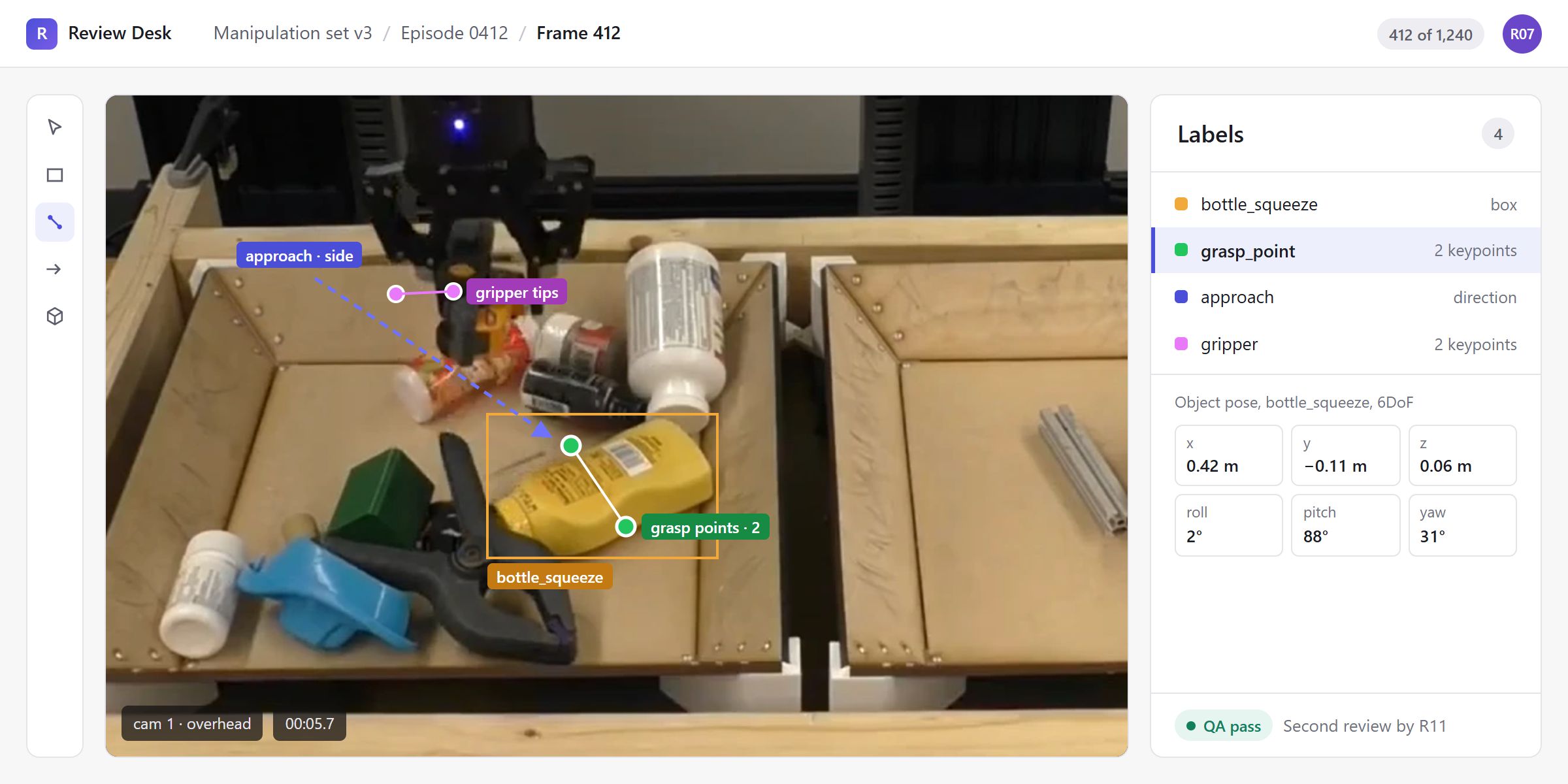
Grasp
Keypoints and bounding box
Grasp point, approach direction
Pose
Keypoints and 6DoF pose
Object pose, gripper pose
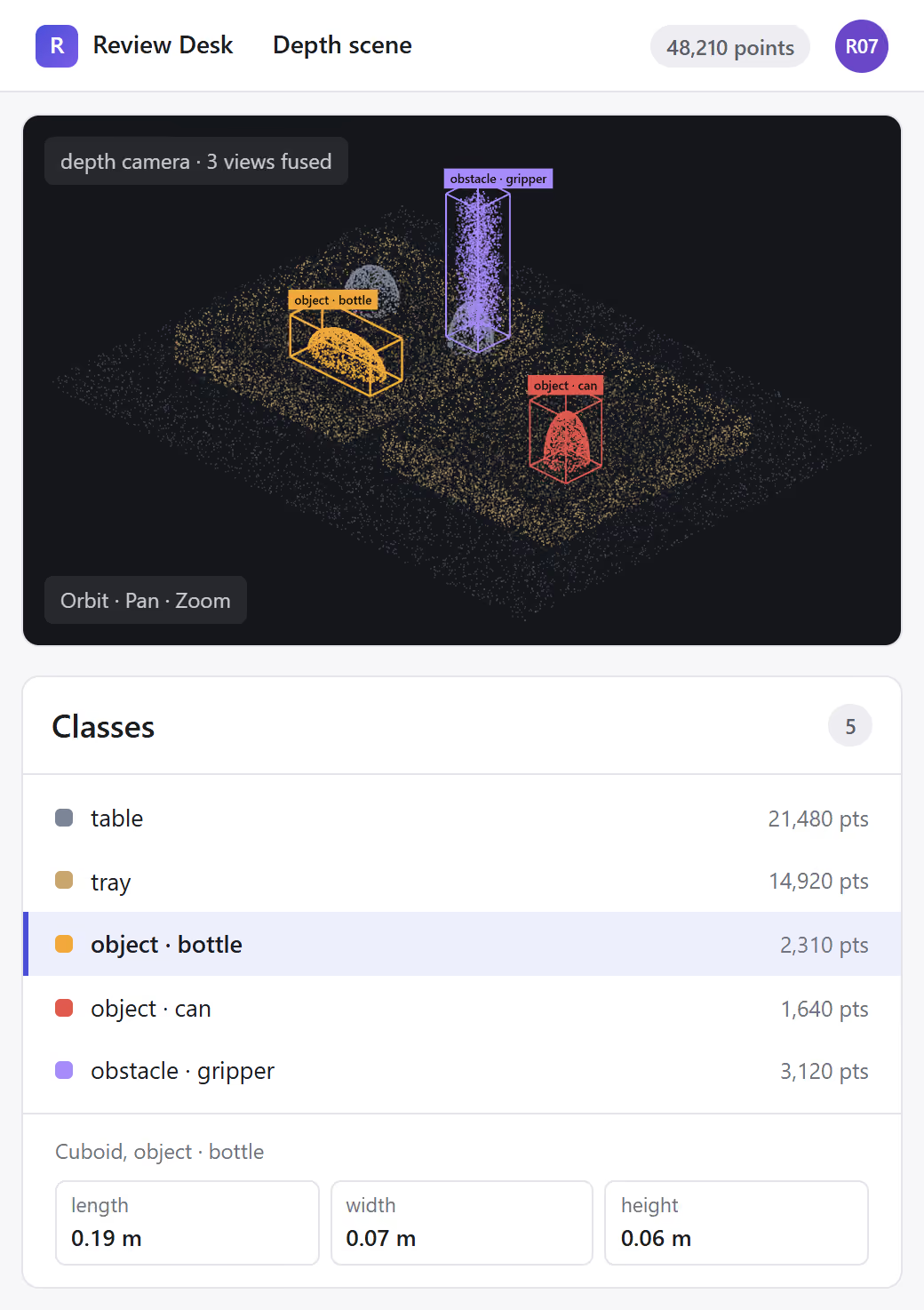
Scene
3D segmentation and 3D cuboid
Table, object, obstacle
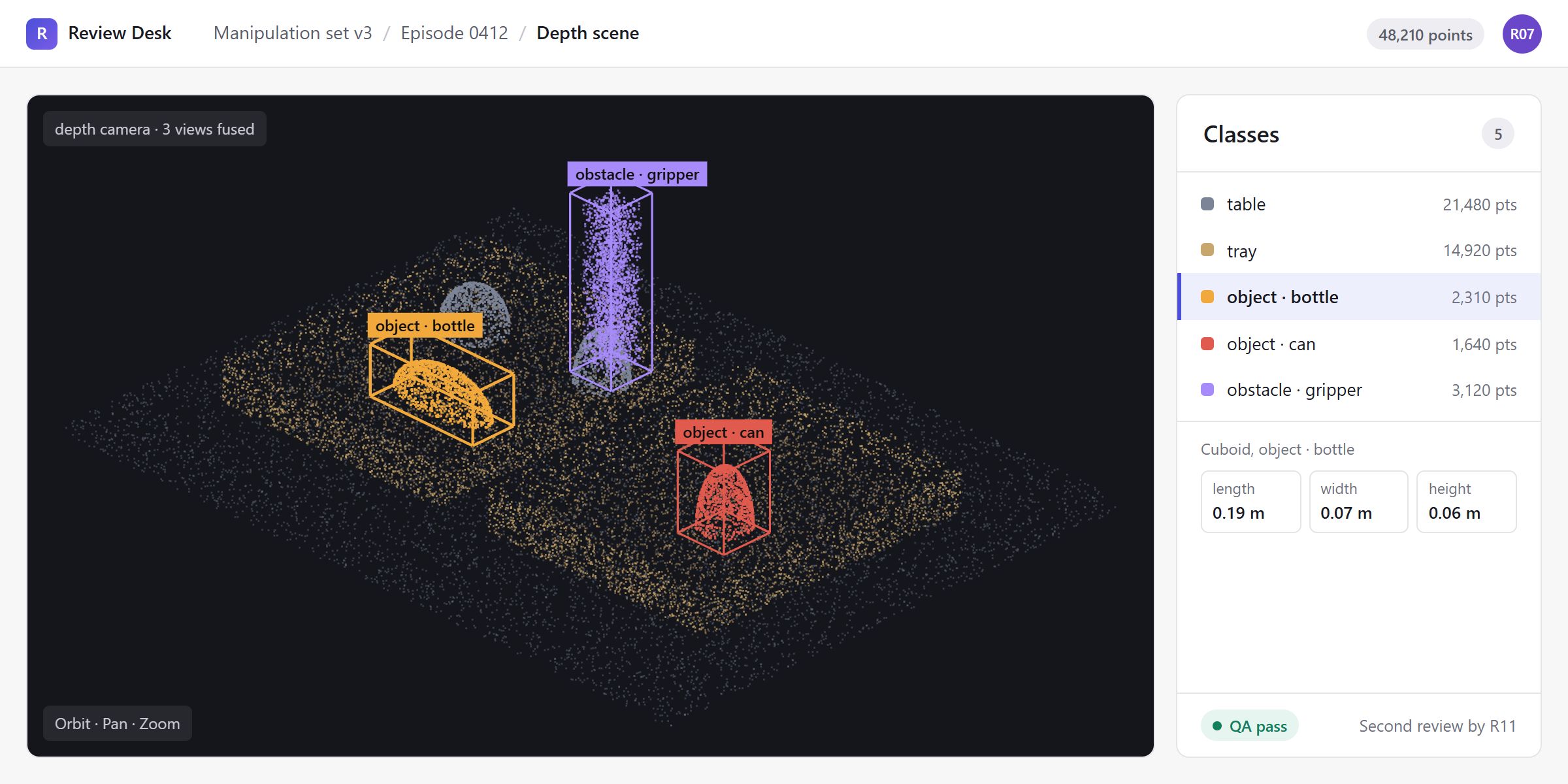
How we test the model
The tests that matter for physical AI & robotics models, and what you get back from each.
Rollout success
People watch policy rollouts and mark success, partial success or failure.
You get backSuccess by task, failure reasons
Description consistency
Action descriptions checked against a shared vocabulary.
You get backDrifting and inconsistent terms
Rollout preference
Reviewers choose the better of two rollouts for the same task.
You get backPreference rates with reasons
Where physical AI & robotics teams start
Problems teams bring us, and the first piece of work we would scope.
You need a large team describing robot video next week, not next quarter.
What we doWe trained 30+ annotators in one week for Client B and held about 2,000 videos a week.AnnotateTwo arms, two cameras, and one description that has to cover both.
What we doAnnotators follow both streams and describe concurrent actions in one vocabulary.AnnotateA success rate says little about why the robot failed.
What we doFailure reasons tagged on every rollout, so you know what to fix.Evaluate & alignRelated work
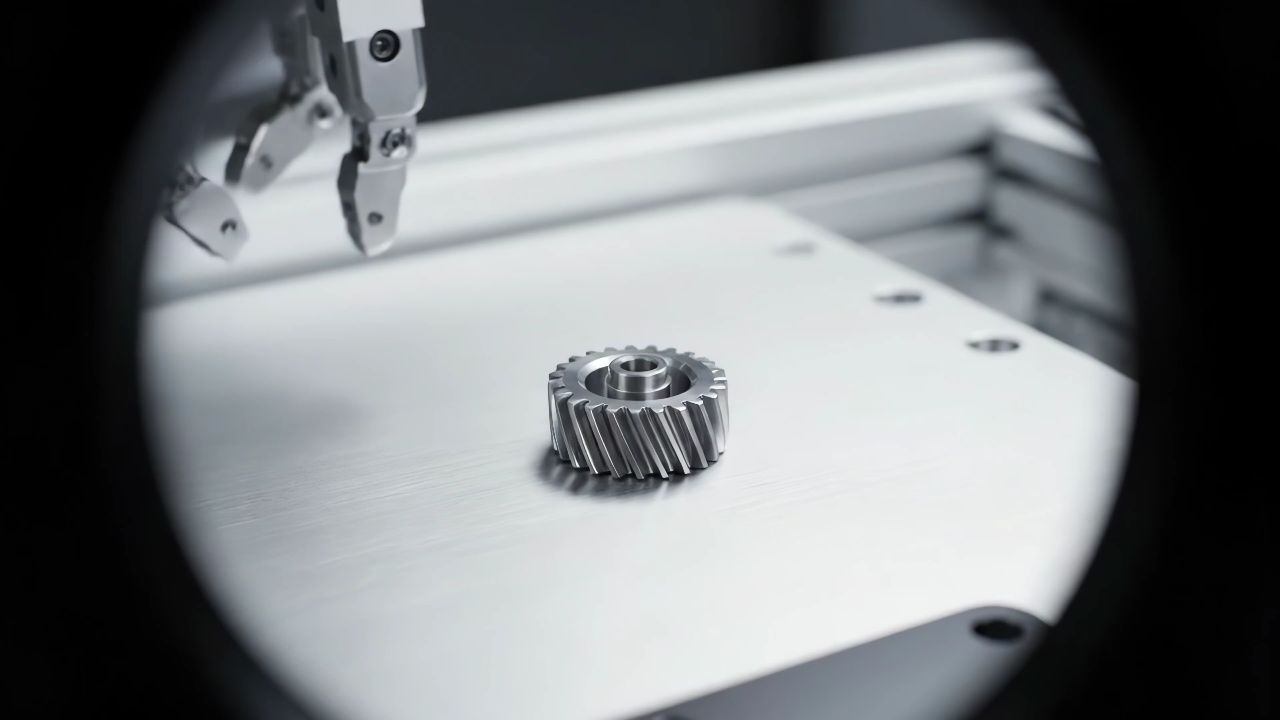
2,000 robot videos described every week by a team built in seven days
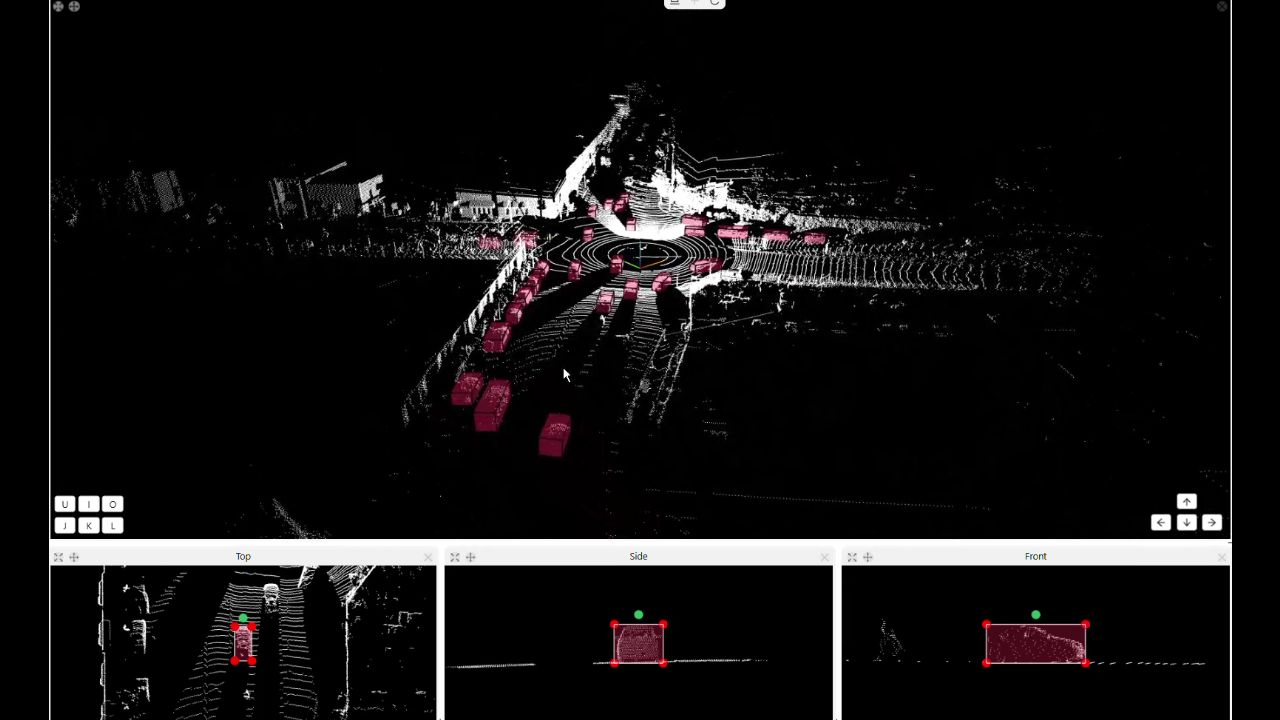
Half a million images for autonomous navigation, with every file kept on EU servers
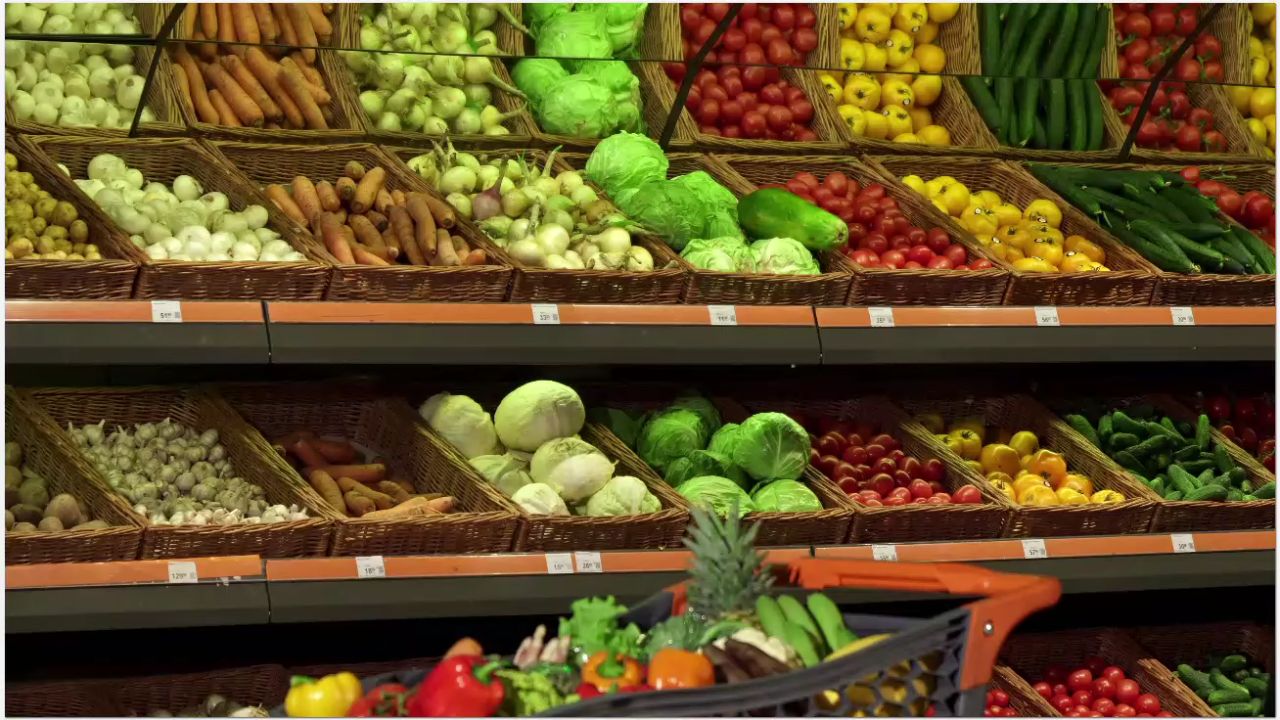
Twelve times the volume in five weeks, with quality holding at 95 to 98%
Human in the loop support for visual deviation detection on production lines, with a response time requirement under two minutes.
24/7 live review for production line visual AI, quality above 95% by month two
Bring us the physical AI & robotics data your model gets wrong.
Send a small batch and get it back done, free, usually within 24 to 48 hours. You judge the work before you pay for anything.